---
title: Our Challenge | Derbyshire Swift Conservation
description: Support Derbyshire Swift Conservation to help protect swifts. Volunteer, donate, and learn how to support these iconic birds in their battle against decline.
image: https://derbyshireswiftconservation.org/hubfs/DSC%20320x132.jpg
---
[Skip to content](https://derbyshireswiftconservation.org/our-challenge#main-content)
[](https://derbyshireswiftconservation.org?hsLang=en)
- [Our Challenge](https://derbyshireswiftconservation.org/our-challenge)
- [What We Do](https://derbyshireswiftconservation.org/what-we-do)
Show submenu for What We Do
- [Our Activities](https://derbyshireswiftconservation.org/our-activities)
- [Get Involved](https://derbyshireswiftconservation.org/get-involved)
Show submenu for Get Involved
- [Share Your Swift Nest Sightings](https://derbyshireswiftconservation.org/nest-survey)
- [News & Events](https://derbyshireswiftconservation.org/news)
- [Our Challenge](https://derbyshireswiftconservation.org/our-challenge)
- [What We Do](https://derbyshireswiftconservation.org/what-we-do)
Show submenu for What We Do
- [Our Activities](https://derbyshireswiftconservation.org/our-activities)
- [Get Involved](https://derbyshireswiftconservation.org/get-involved)
Show submenu for Get Involved
- [Share Your Swift Nest Sightings](https://derbyshireswiftconservation.org/nest-survey)
- [News & Events](https://derbyshireswiftconservation.org/news)
[Donate](https://derbyshireswiftconservation.org/donate?hsLang=en)
# Our Challenge
### **The Common Swift (***Apus apus***) Vanishing from Our Summer Skies**
Every May, Swifts return from Africa to the same rooftops where they were born. For centuries they have nested in the cracks and eaves of our buildings. But modern renovations and construction are sealing these spaces — and many Swifts now return to find their homes gone.
**Across Derbyshire and the UK, their numbers are falling.**
## **A Bird Like No Other**
Swifts are one of the true sounds of a British summer. Their high-pitched screams and sweeping flight instantly signalling the season has arrived. What makes them special is how close they live to us, nesting in our buildings and bringing moments of wild nature right into our everyday lives.
They’re not just a joy to watch—they’re hard workers too. Swifts spend their days racing through the sky, eating thousands of insects and helping keep ecosystems in balance. And their lives are nothing short of extraordinary: flying almost constantly, travelling thousands of miles between Africa and the UK each year.
Put simply, swifts make our summers feel alive. Without them, something important would be missing.
## Our Swifts Are In Trouble
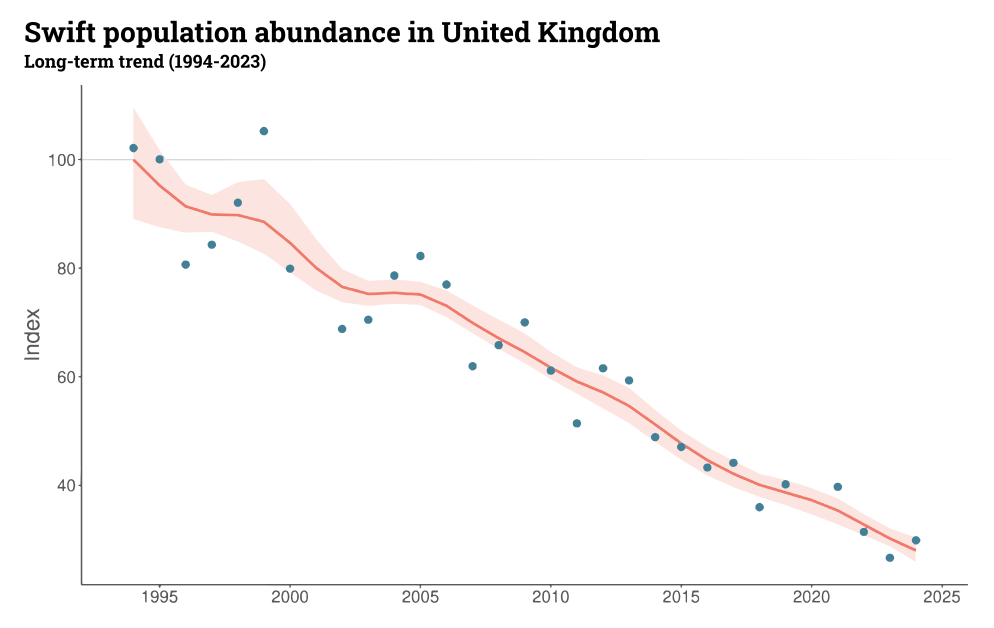
Breeding numbers of Common Swift *Apus apus* have declined across the UK by over 60% over the last 25 years.
Steep declines have been observed across England, Scotland and Wales since 1995, and we're still not entirely sure what's causing them.
The species has been on the UK Red List of Birds of Conservation Concern since 2021.
Loss of Swifts is part of a wider decline in our summer bird visitors, including Nightingales and House Martins.
Swifts have adapted to nest almost exclusively in buildings—especially older or abandoned ones.
A major factor in Swift decline is loss of nesting sites through building renovation and repair.
---
[Source: BTO 1](https://derbyshireswiftconservation.org/our-challenge#ref1)
## A Local Issue
There's still a lot to discover about the current state of nesting sites in Derbyshire, but key Swift "hot-spots" have been identified across the county.
Derbyshire Swift Conservation have identified key populations in Rowsley, Youlgreave, and Darley Dale in 2025 surveys.
But many nest sites are undocumented and unprotected—we need more help to identify and map Swift activity across the county. This county-wide approach is what makes Derbyshire Swift Conservation unique.
## There Is Hope
With our help and research, Swift nesting populations can recover. While we don't fully know why Swifts numbers are declining, there are some actions we can take that are proven to help—and this a key reason why Derbyshire Swift Conservation was founded.
#### We can protect existing nest sites.
#### We can install Swift nest boxes on existing buildings.
#### We can include Swift bricks in new developments.
#### We can map and monitor local colonies.
#### We can engage communities and raise awareness.
#### We can work with local businesses to mitigate risks to nests.
And while we're doing all that, Derbyshire Dales Swift Project continues to investigate ways to better survey and conserve Swift populations.
[Find out more about what we do](https://derbyshireswiftconservation.org/what-we-do?hsLang=en)
## Get Emergency Advice
**Do you think you’ve found a grounded swift or blocked nest?** We and our partners can help. Find out what to do next.
[Get Emergency Advice](https://www.hubspot.com/) [Get Help Identifying Swifts](https://www.hubspot.com/)
## We're Not Alone
We're of course not alone in our mission—there are a great many number of organisations and networks across the UK and Europe doing amazing work, and we'd not be doing our part if we weren't shouting them out. Here's to them!
- [Sheffield Swift Network](https://sheffieldswiftnetwork.org/)
Leads the way in employing Swift bricks, and has done great work in the creation of their Swift Streets initiative
- [Swifts Local Network](https://groups.google.com/g/swiftslocalnetwork)
An incredible resource that coordinates knowledge and allows individuals to share learning across groups
- [RSPB](https://www.rspb.org.uk/)
A nationally respected body that has created survey method guidance specifically for Swifts
- [British Trust for Ornithology](https://www.bto.org/) (BTO)
The definitive source of statistics on Swift population trends, and has identified dramatic declines of migrant species of birds
### References
1. Data from the BTO /JNCC/RSPB Breeding Bird Survey: 1995 - 2023
## **Our Founding Partners**
We could only exist with the support of our partners, and to them we are extremely grateful.
**Sign up to our newsletter to stay in the loop**
[Sign up now](https://2fa4ej.share-eu1.hsforms.com/2pZT49CMRT5mRd2-jvy-7Ig)
[mailto:info@derbyshireswiftconservation.org](mailto:info@derbyshireswiftconservation.org)
- [Our Challenge](https://derbyshireswiftconservation.org/our-challenge)
- [What We Do](https://derbyshireswiftconservation.org/what-we-do)
- [Our Activities](https://derbyshireswiftconservation.org/our-activities)
- [Get Involved](https://derbyshireswiftconservation.org/get-involved)
- [Share Your Swift Nest Sightings](https://derbyshireswiftconservation.org/nest-survey)
- [News & Events](https://derbyshireswiftconservation.org/news)
---
Copyright 2026 Derbyshire Swift Conservation | Registered Charity Number: 1206439
[Cookies](https://derbyshireswiftconservation.org/about/cookies?hsLang=en) | [Policies & Procedures](https://derbyshireswiftconservation.org/about/policy?hsLang=en)